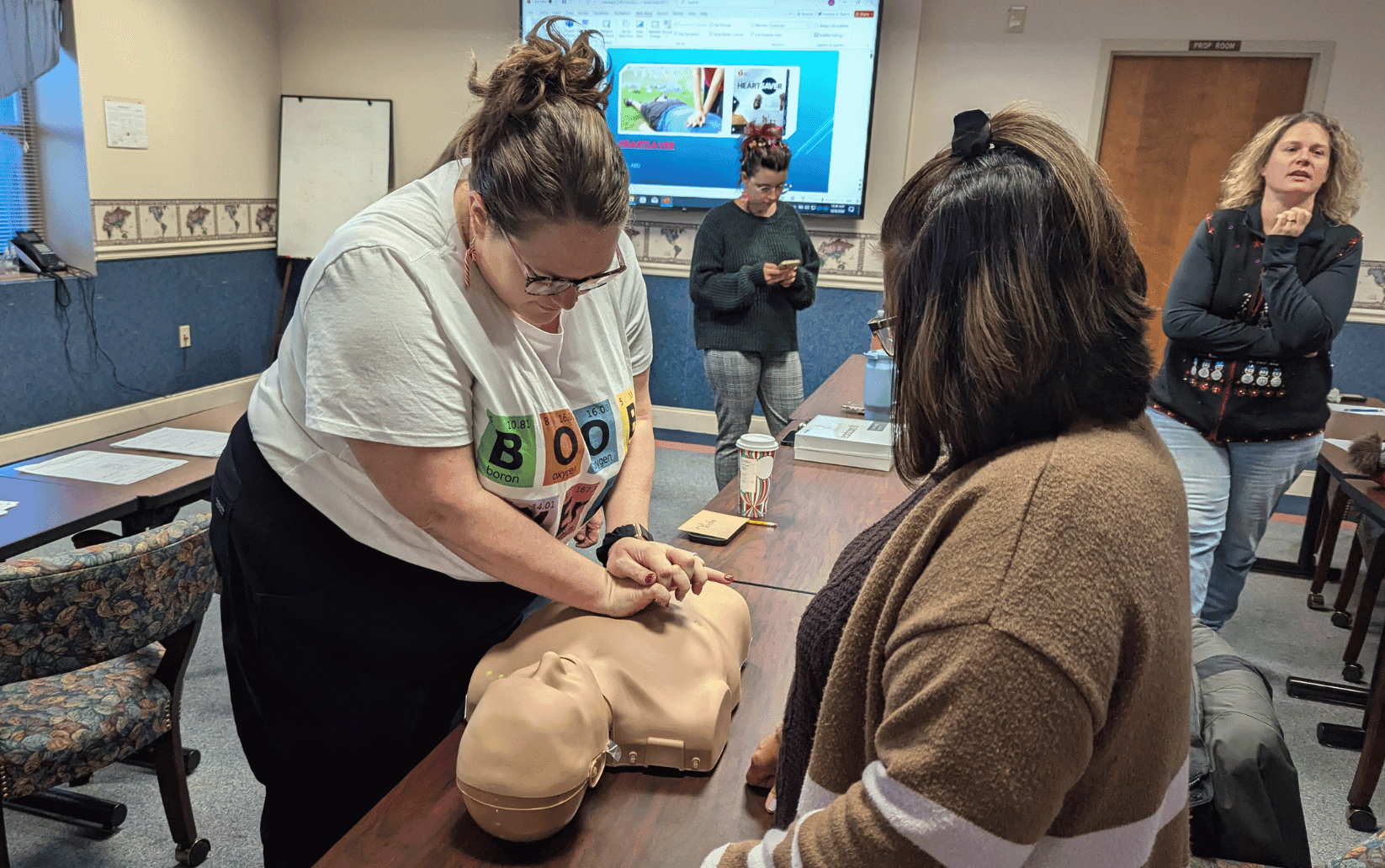
CPR is an emergency lifesaving procedure performed when the heart stops beating. Immediate CPR can double or triple chances of survival after cardiac arrest, according to the American Heart Association. CPR is highly effective in restoring blood circulation and oxygenation to vital organs during a cardiac arrest.
Participants will use both adult and infant CPR dolls to learn hands-on CPR techniques.
If performed in a timely manner, it is estimated that CPR could save 100,000-200,000 lives annually in the United States.
American Heart Association CPR training is broken up into two types: Heartsaver ($65 per student) and Basic Life Support (BLS) ($60 per student). Heartsaver is for non-medical personnel and focuses on CPR/AED use in the community. BLS is for medical providers or those who want to be medical providers and focuses on CPR/AED use in health-care or first responder settings.
Upon successful completion of course, students will get a two-year CPR card from the American Heart Association.
Individuals in the Monongalia County area who wish to set up training for five or more individuals can contact Joe Klass, chief of operations for Monongalia County Health Department’s Threat Preparedness program, at Joseph.L.Klass@wv.gov.
Class length: Three to four hours, depending on class size and type of class (Heartsaver vs. BLS)